How biryani became Lahore
The migration of a dish, the city it built, and the layers we still fight over.
By Sara Mahmood
The biryani arrived in Lahore the way most great things did — in someone else's suitcase. After 1947, families from Hyderabad, Lucknow and Delhi crossed the border carrying recipes folded into linen, and rice cookers wedged between children.
Within a generation, the city had taken what it loved and rewritten it. Lahori biryani is hotter, redder, tangier than its ancestors. We use long-grain basmati from Kasur. We marinate the meat for twelve hours in yogurt, kashmiri red chilli and fried onions browned to a deep mahogany.
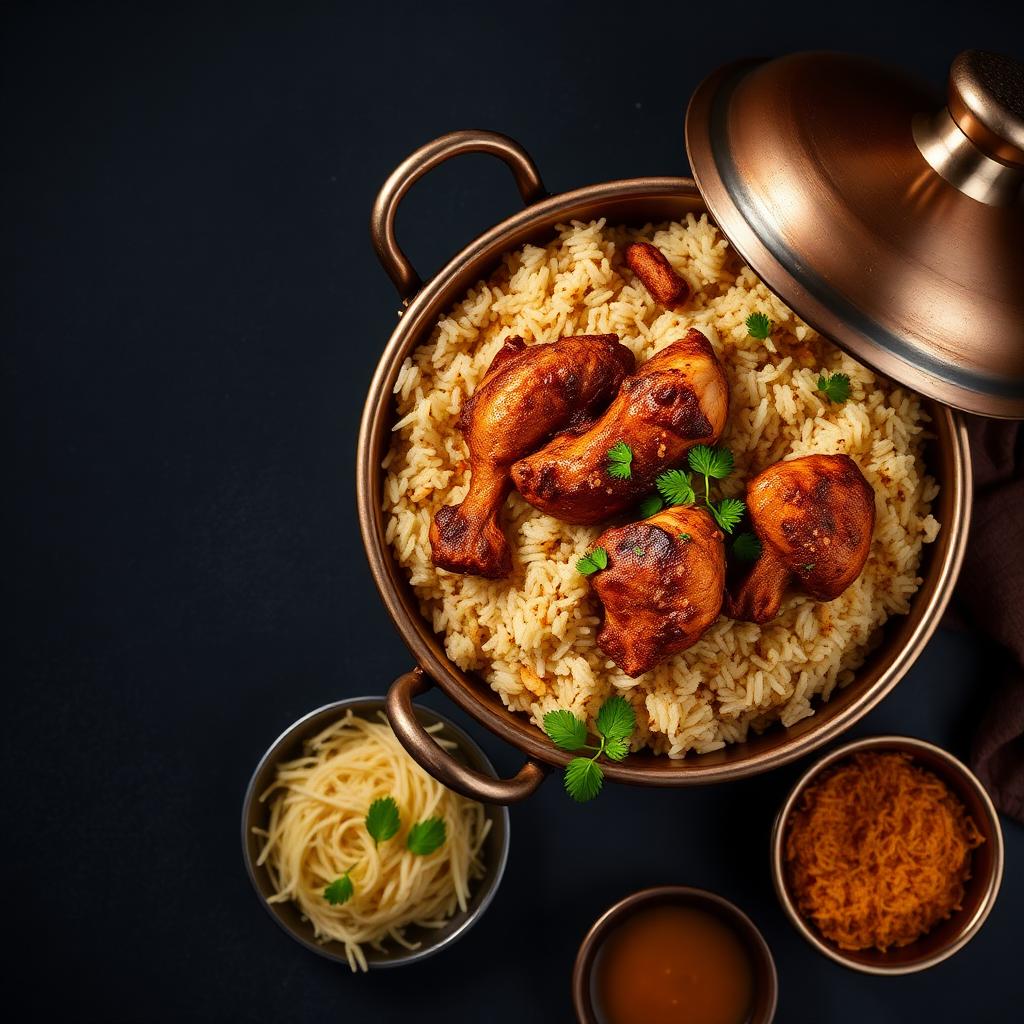
Then comes the layering — and this is where households still come to blows. Three layers or four? Aloo or no aloo? Plums in the mutton version, never in the chicken? At Shahi Dastarkhwan we make our peace with all of it. We serve the chicken classic-style, the mutton Sindhi-style with potatoes and plums, and the prawn coastal-style with roasted coconut.
The dum — the seal of dough on the copper handi — goes on at 4pm sharp. When we crack it open at 7, the steam carries saffron, kewra and forty years of someone's grandmother whispering in our ears.